What Smartphone Reviews Rarely Tell You (But Should)
Most smartphone reviews focus on specs and first impressions. This in-depth article reveals the things reviewers rarely talk about — long-term performance, battery aging, software behavior, and real ownership trade-offs.
What Smartphone Reviews Rarely Tell You (But Should)
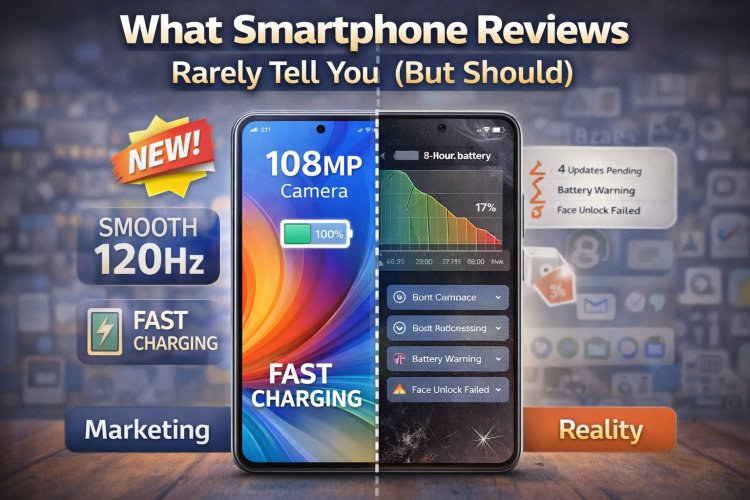
Smartphone reviews are everywhere. They talk about processors, megapixels, charging speeds, and refresh rates. Yet many users still end up disappointed weeks or months after buying a highly rated phone.
That is because most reviews focus on what looks good on day one, not what actually matters after long-term use. This article covers the realities that are often skipped — intentionally or not.
1. Specs Don’t Age the Way You Think
A phone with powerful hardware does not automatically stay fast. Thermal management, software optimization, and background processes determine how a device feels after months of usage.
Many phones start strong but gradually feel slower due to aggressive animations, poor memory management, or unoptimized updates. This is rarely visible in short-term reviews.
2. Battery Life vs Battery Health
Reviews usually talk about how long a phone lasts on a single charge — but almost never about how the battery behaves after hundreds of charge cycles.
Fast charging is convenient, but higher charging speeds generate more heat. Over time, this can reduce battery capacity faster than expected. A phone that charges slightly slower often maintains better battery health.
3. Camera Quality Is Not Just About Photos
Most reviews emphasize daylight photography. What is rarely discussed is consistency.
Focus reliability, shutter lag, video stabilization, and color accuracy across different lighting conditions matter more than occasional impressive shots.
A camera that delivers predictable results is often better than one that looks great only in ideal conditions.
4. Software Experience Matters More Than Hardware
Software defines how a phone feels every single day. Notification behavior, background app limits, system animations, and update frequency directly affect usability.
Clean, well-optimized software often feels faster than feature-heavy interfaces running on stronger hardware. This is something you only notice after extended use.
5. Build Quality Is About More Than Materials
Glass and metal feel premium, but ergonomics determine comfort.
Weight distribution, button placement, edge curvature, and grip matter more than whether the back is glass or plastic.
A lighter phone with a plastic back can be more comfortable than a heavier phone with premium materials.
6. Update Promises vs Update Reality
Manufacturers often advertise long update support, but the quality of updates matters just as much as the number.
Buggy updates, delayed fixes, or performance regressions can impact the experience. Long-term software support only helps if it is stable.
7. Reviews Rarely Talk About Ownership Fatigue
Ownership fatigue is the feeling that a phone becomes annoying over time — slow fingerprint sensors, inconsistent notifications, or battery anxiety.
These small issues rarely appear in early reviews, but they significantly affect long-term satisfaction.
How to Read Smartphone Reviews More Critically
- Look for long-term follow-ups, not just launch reviews
- Pay attention to software behavior, not just specs
- Consider comfort and ergonomics
- Be skeptical of extreme praise or criticism
Final Thoughts
The best smartphone is not the one with the highest benchmark scores or the fastest charging speed. It is the one that feels reliable, predictable, and comfortable to use every day.
Understanding what reviews leave out helps you make smarter buying decisions — and avoid regret later.
What's Your Reaction?